
Why is there so much interest in Alderney hedgehogs?
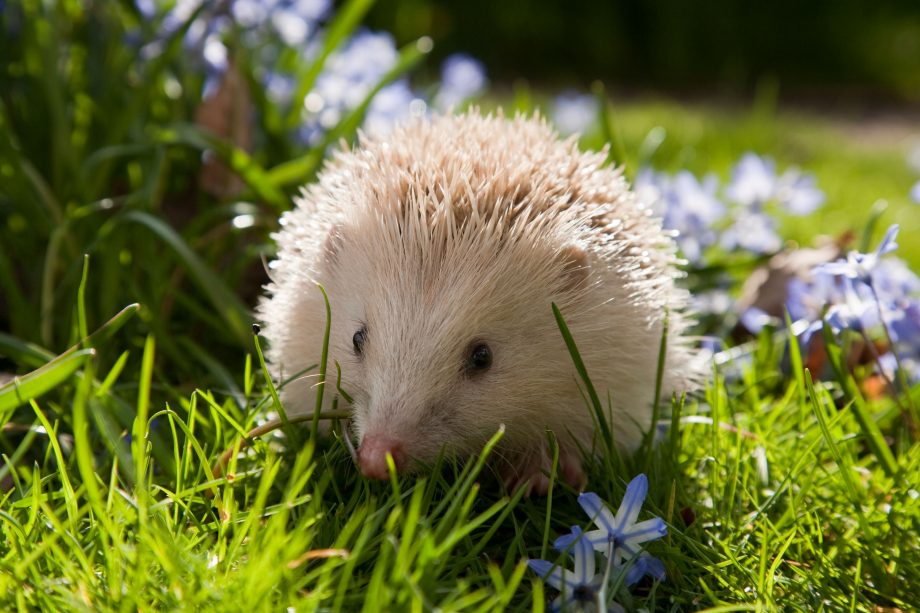
People who live on Alderney will come across them regularly in the hours after dark, either walking around the wilder areas, or on the golf course, campsite, running along the roads, or in their gardens.
Further, coming across brown or blonde hedgehogs, when out and about, seems quite normal to Alderney residents, however, it is not to the outside world.
Blonde hedgehogs are extremely uncommon throughout the geographic range of the species. Indeed, in the UK there has only been seven reports, from various hedgehog hospitals, of blonde individuals between 2008 and 2021. So, the high number of blondes on Alderney is extraordinarily rare*.
*There are only two known populations of blonde hedgehogs in the world, both in the UK, one on Alderney, and the other is on North Ronaldsay in Scotland.
The European hedgehog’s scientific name is Erinaceus europaeus. Palaeontologists explain that they evolved around 15 million years ago, and are one of the oldest species of mammals on the planet (in comparison, humans evolved around 300,000 years ago), and its geographic range stretches from the UK and Eire into Europe, and Scandinavia. The animal’s normal colour is described as brown, and is referred to as the wildtype of the species, meaning that it is the typical colour. Any other phenotype (observable characteristic) is a genetic mutation from that wildtype, and so blonde animals have a genetic mutation that suppresses the production of pigmentation. This mutation is called leucism, from the Greek leukos meaning white.
The only other animal that has been reported to have high numbers of blonde individuals in the population is the black bear (Ursus americanus) of British Columbia, and are known as the Kermode bear (Ursus americanus kermodei), although native Canadians prefer to call them Spirit bears. These cute bears have a prominent place in the oral traditions of the indigenous people of the area.
So, as the hedgehogs of Alderney are an island population with such high numbers of blonde animals, they are an ideal subject for research, due to their accessibility, and the extreme rarity of the blonde population.
How did hedgehogs arrive on Alderney?
The anecdotal evidence has been described by others. To summarise:
In his book of 1974 Coysh noted that G A Martin remarked that there were no hedgehogs on the island in the 1800s.
In the early 1900’s Iris Godfery (b. 1910), mentioned that she remembered seeing hedgehogs as a child in the 1920s. Also, another record suggests that Mr Osleton (senior) supplied hedgehogs for food to a regiment before 1917 (some reports suggest that the regiment was Welsh, however when referring this story to Trevor Davenport (Alderney’s local military historian) he said that there were a number of regiments stationed on the island between those dates: from 1910 to 1913 The Royal Irish Regiment, from 1913 to 1914 the Yorkshire Regiment (The Green Howards), from 1914 to 1916 The North Staffordshire Regiment. Between 1916 to 1917 The Royal Alderney Militia, The North Lancaster Regiment in 1919 and The Royal Irish Regiment in 1920). The records mention that Mr Osleton (senior) left the island during WW1 and when he came back he remarked that there weren’t any hedgehogs left. Further, his son, who was on Alderney during WW11, pointed out that there were no hedgehogs on the island during that period (1939-1945).
So, according to accounts, hedgehogs were reintroduced in the 1960s. Two pairs being brought to the island from the UK, with one pair having been purchased from Harrods. We can confirm that account as we have managed to track down the person who, as a young boy, caught and sold the hedgehogs to Harrods, who, on discussion, confirmed that he never saw any blonde individuals. Unfortunately, we don’t know where on the mainland of the UK the other pair came from. Another pair is understood to have been sourced from Guernsey. So, it seems, from this information, that hedgehogs were brought to the island in the early 1900s, disappeared by the end of WW1, and were reintroduced in the 1960s.
As mentioned above, these are anecdotal reports, and although the importing of 3 pairs of hedgehogs likely happened, the existence of a hidden, relic population on the island cannot be ruled out.
That being said, our working hypothesis is that six brown animals were imported and that the blondes immerged from this founder population.
As mentioned above, these are anecdotal reports, and although the importing of 3 pairs of hedgehogs likely happened, the existence of a hidden, relic population on the island cannot be ruled out.
That being said, our working hypothesis is that six brown animals were imported and that the blondes immerged from this founder population.
Previous hedgehog studies in Alderney
The anecdotal evidence has been described by others. To summarise:
In his book of 1974 Coysh noted that G A Martin remarked that there were no hedgehogs on the island in the 1800s.
In the early 1900’s Iris Godfery (b. 1910), mentioned that she remembered seeing hedgehogs as a child in the 1920s. Also, another record suggests that Mr Osleton (senior) supplied hedgehogs for food to a regiment before 1917 (some reports suggest that the regiment was Welsh, however when referring this story to Trevor Davenport (Alderney’s local military historian) he said that there were a number of regiments stationed on the island between those dates: from 1910 to 1913 The Royal Irish Regiment, from 1913 to 1914 the Yorkshire Regiment (The Green Howards), from 1914 to 1916 The North Staffordshire Regiment. Between 1916 to 1917 The Royal Alderney Militia, The North Lancaster Regiment in 1919 and The Royal Irish Regiment in 1920). The records mention that Mr Osleton (senior) left the island during WW1 and when he came back he remarked that there weren’t any hedgehogs left. Further, his son, who was on Alderney during WW11, pointed out that there were no hedgehogs on the island during that period (1939-1945).
So, according to accounts, hedgehogs were reintroduced in the 1960s. Two pairs being brought to the island from the UK, with one pair having been purchased from Harrods. We can confirm that account as we have managed to track down the person who, as a young boy, caught and sold the hedgehogs to Harrods, who, on discussion, confirmed that he never saw any blonde individuals. Unfortunately, we don’t know where on the mainland of the UK the other pair came from. Another pair is understood to have been sourced from Guernsey. So, it seems, from this information, that hedgehogs were brought to the island in the early 1900s, disappeared by the end of WW1, and were reintroduced in the 1960s.
After checking these studies, we found that there was a significant problem with the data. Both mentioned that some of the individuals were characterised as intermediates. However, there was no description, and no pictures, (Tutt and Morris characterised all intermediates as brown, i.e. 20 out of the total of 67 individuals counted were reported as intermediates, and so that 17 out of 67 counted were considered blonde).
In the other study, all intermediates were considered blonde, and they concluded that 74% were blonde (i.e. 40 out of 54 total counted were blonde).
Both results are therefore problematic.
We have been in communication with Dr Morris and the supervisor for the M.Sc. student Rebecca Brown, but unfortunately, both couldn’t help us with the intermediate description problem. We have therefore concluded that the brown/blonde proportions suggested in both these studies cannot be critically investigated.
Indeed, as a follow up, we asked our 2021 volunteers to let us know if they could not identify a hedgehog as brown or blonde, but we didn’t receive any such reports. Furthermore, during July to early September 2021, we went out regularly to work with the hedgehogs, and we concluded that all the blondes we found were clearly blonde. Which suggests that present day identifiable intermediates are rare.
Also, in our view, it is unlikely that between the 1996 and 2008 counts the proportion of blondes went from 25% to 74%.